Weekend encounter with Hoi An, Vietnam
 By Brown Eyes · · Vietnam
I haven’t been so excited over a new place for some time. A short, girls’ weekend trip to Hoi An, Vietnam turned out to be one of my best holidays this year!
What I like most about the whole trip is Hoi An’s unique personality. It is a quaint little town, with lots of colours and personality while still maintaining the same kind of peace and calmness that the residents enjoyed over the decades.
Hoi An is a coastal town, in the south central coast region of Vietnam. The nearest airport is Da Nang, where AirAsia flies direct from Kuala Lumpur that takes about 2 hours 55 minutes. From the airport to Hoi An, it’s about 40 minutes car ride. Some visitors opt to stay in Da Nang and make a day-trip to Hoi An, others like us, make Hoi An our permanent stay for the trip.
Hoi An, declared as UNESCO World Heritage Site in 1999, is a very walkable place. The main streets of the heritage area are closed for traffic in the afternoon until late evening, making it easier for visitors to either cycle or walk to explore the town. It is recognised as an exceptionally well-preserved small-scale trading port, which was active from the 15th to 19th centuries, both with Southeast Asia and East Asia and the rest of the world (Source: UNESCO website)
Locals still lived within the old town, although it’s obviously visible that a majority of them are the elderly generation while young ones have moved to bigger cities to work and live.
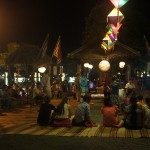
In the morning, Hoi An’s peacefulness is only hammered by the honking of motorbikes and bells of cyclists. Once the sun sets and dusk awakens, the town is transformed into a bustling place where locals gathered by the river, chatting and having supper together; or listening to old folks performance. Lanterns are lit on the street, while locals gathered near to the river to watch a local musical play.
We stayed at Little Hoi An Boutique Hotel & Spa, which we booked via agoda.com. We had a slight hiccup when we arrived as the airport transfer was late by 40 minutes and when the driver finally arrived, he had the wrong name on his signage. Nevertheless, the reception at the hotel was quick to respond upon our arrival, and appeased our annoyance with their warm hospitality. Over the 3 days of our stay, the staff went their extra mile in their services, whether it was to ensure our local breakfast was well explained, or to offer guidance on where to go.
Food wise, Hoi An offers many varieties, whether it’s local cuisine or typical Vietnamese dishes or international options. Like good ol’ Malaysians, we went on our own food tour, trying out local dishes and street food. Because of Chinese influence historically, Hoi An popular street food also has a taste of it, such as cao lau - noodles with pork and greens (super yummy!); com ga (chicken rice) and white rose (shrimp dumpling).
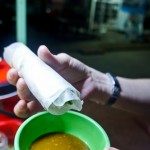
And of course no visit to Vietnam is complete without trying banh mi - Vietnamese style sandwich. Following Tripadvisor’s tip, we tried two highest rated banh mi stalls in town ie. Banh Mi Phuong and Banh Mi Queen Mdm Khanh. Both are good, altho’ we probably preferred to the first simply because it’s more spicy (most Malaysians enjoy spicy). The banh mi ranged between 20,000 to 25,000 dong each.
On our last evening, we decided to splurge a bit and head to Morning Glory, the popular restaurant in town. It’s best to make a reservation, otherwise like us, you’d end up like us having to return after 45 minutes to get a table - we had left for another restaurant but only found out they don’t serve local dishes so we had appetisers and returned to Morning Glory. The name morning glory, if you didn’t know, is the name of a purple wild flower. In Vietnam, they actually use the plant in their dishes. The young leaves and stalks of morning glory are often used in salads and spring rolls. This Morning Glory restaurant, founded and owned by Ms Vy, who also owns a number of other restaurants and cafes in Hoi An; serves gourmet Hoi An and Vietnamese dishes. The food is not bad, but services may not the best as they’re generally very busy. The meal, comprising of 1 appetiser, 2 main courses and 1 bottle of mineral water cost us about 20usd for 2 persons.
In between meals, we did what girls do, we went to the spa! Palmarosa Spa, highly recommended on Tripadvisor deserved its rating for their warm hospitality and services. We went back twice - that’s how much we enjoyed the sessions there. Although we did overhear one Aussie guy who complained that his masseur did not put in enough pressure on his aching shoulder. So I guess not everyone goes home happy.
Three days two nights passed by quickly, but it was the kind of relaxing weekend that I was aiming for for this trip and I’m glad that Hoi An met the expectations. This is definitely a place that I’d recommend to friends. There are more to Hoi An than the ancient town, as beaches are also nearby as well as other surrounding attractions but that will be for next time!

Written by Brown Eyes. Second generation of Malaysian Chinese. More about us